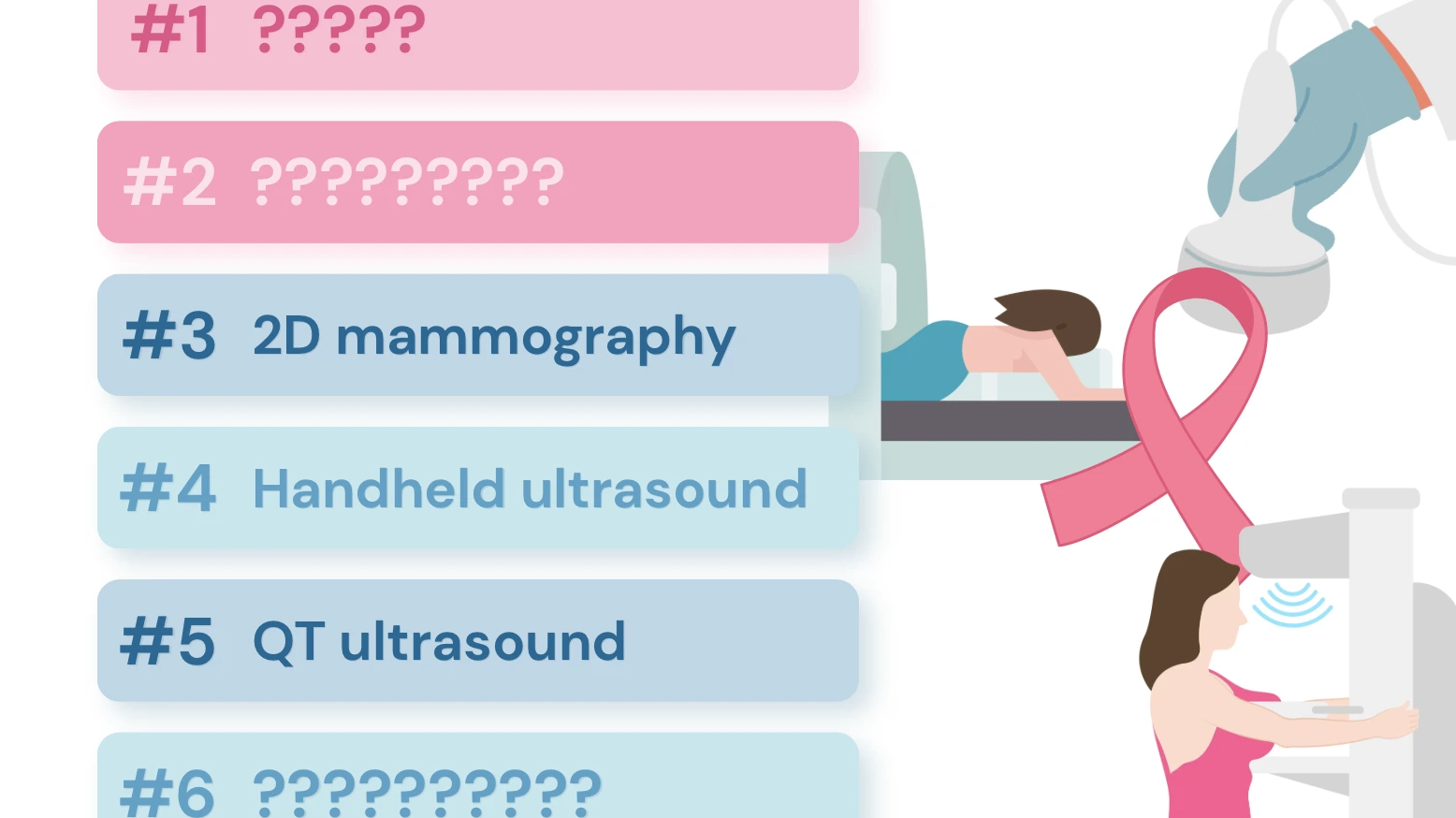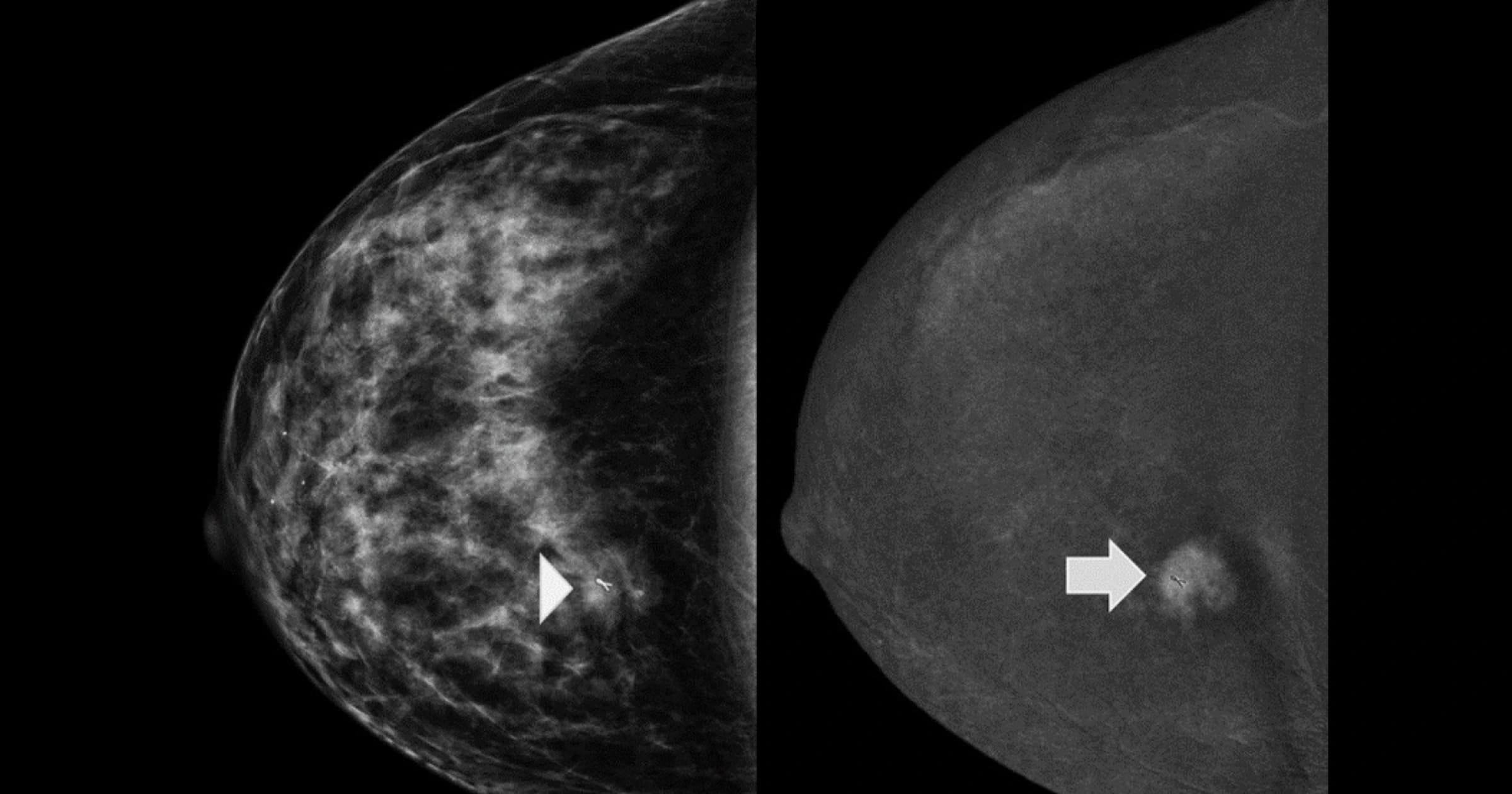

Every October, the world turns pink. Yet, breast cancer may be the most talked-about disease that people still fundamentally misunderstand.
This guide takes the most common beliefs about breast cancer and holds each one up to the research. What's left is less frightening, more useful, and a lot more within your control than most people think.
Quick answers:
- Who gets breast cancer? About 1 in 8 U.S. women over a lifetime, and roughly 1 in 726 men. Most have no close relatives with the disease.
- Can you prevent it? Not entirely, but limiting alcohol, staying active, and maintaining a healthy weight after menopause measurably lower risk.
- Is it survivable? Very. When found before it spreads, the five-year relative survival rate is over 99%.
How Breast Cancer Actually Forms
A breast isn't a uniform mass, it is more like a tree. Milk-producing lobules (the leaves) drain into ducts (the branches) that lead to the nipple, all set in fat and connective tissue. Most breast cancers begin where the smallest ducts meet the lobules, in tiny structures called terminal duct lobular units.
Cancer starts when a cell in that lining picks up errors in its DNA, the instructions that tell it when to divide and when to stop. Most of those errors aren't inherited. They accumulate over a lifetime, from normal copying mistakes during cell division and from exposures like hormones and alcohol. That's why age is the single biggest risk factor: the median age at diagnosis is 63.
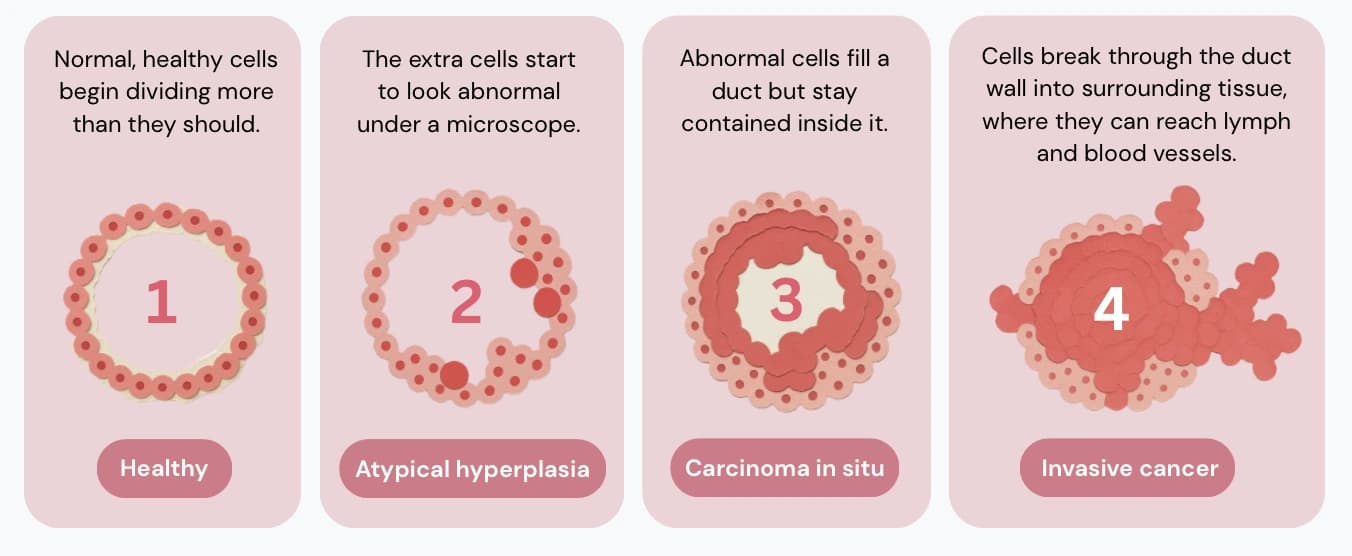
The process usually unfolds in stages:
- Normal cells begin dividing more than they should.
- Atypical hyperplasia: the extra cells start to look abnormal under a microscope.
- Carcinoma in situ (stage 0): abnormal cells fill a duct but stay contained inside it. This is DCIS, and about 60,730 U.S. women will be diagnosed with it this year.
- Invasive cancer: cells break through the duct wall into surrounding tissue, where they can reach lymph and blood vessels.
What's more, “breast cancer” isn't one disease. Doctors classify it by what fuels it. Most breast cancers are hormone receptor–positive, meaning estrogen or progesterone helps them grow, which is why hormone-blocking treatments work so well against them. Others are driven by a protein called HER2, and some, called triple-negative, have none of these markers. Each type behaves differently and is treated differently. Two women with “breast cancer” can have very different diseases.
Who Is Really at Risk
Myth: “It doesn't run in my family, so I'm safe.”
This is the most dangerous misconception on the list. Fewer than 15% of women diagnosed with breast cancer have a close relative who had it. The great majority of cases happen to women with no family history at all.
But inherited mutations matter enormously for the people who carry them. By age 80, women with a BRCA1 mutation have about a 72% risk of breast cancer, and those with BRCA2 about 69%. This is why Angelina Jolie had a double mastectomy in 2013, she tested positive for the BRCA1 gene. But BRCA mutations explain only about 5% to 10% of all breast cancers.
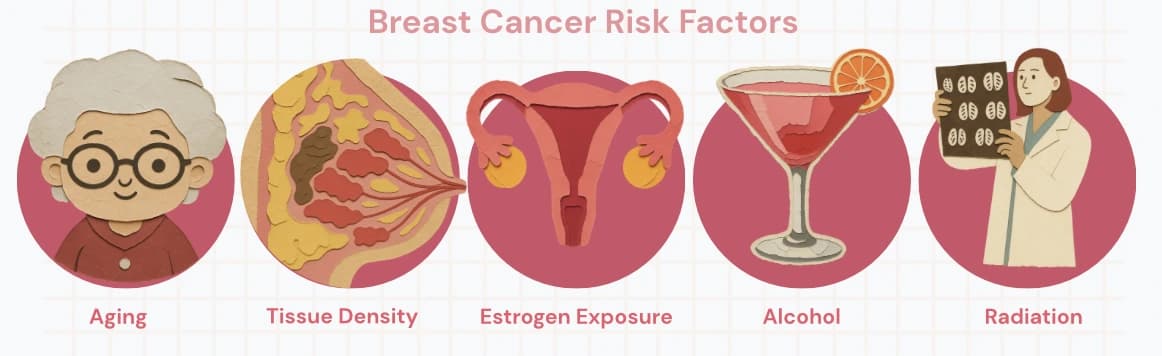
The factors that shape everyone's risk include:
- Being female and getting older. Risk climbs steadily with age.
- Dense breast tissue. It raises risk and makes cancers harder to see on a mammogram.
- Lifetime estrogen exposure. Starting periods early, reaching menopause late, having a first child after 30, or never having children all add modestly to risk.
- Alcohol, inactivity, and weight gain after menopause. These are the big modifiable ones (more below).
- Prior chest radiation, especially before age 30.
Myth: “Breast cancer is an older woman's disease.”
Age is the strongest risk factor, but younger women aren't exempt, and the trend is moving younger. About 1 in 10 women diagnosed is younger than 45, and incidence among women under 50 is now rising about 1.4% per year, faster than in older women. Researchers link this partly to having fewer children, having them later, and rising rates of excess body weight.
Risk also isn't distributed equally. White women are slightly more likely to be diagnosed, but Black women have the highest breast cancer death rate and are more likely to die from the disease at every stage.
Why Breast Cancer Matters for Men Too
Men also have breast tissue, just less of it. But the same ducts exist behind the nipple, and the same cells can turn cancerous. This year, an estimated 2,670 U.S. men will be diagnosed with invasive breast cancer and about 530 will die from it. A man's lifetime risk is roughly 1 in 726.
Rare isn't the problem. Late is. Because no one tells men to look, they tend to be diagnosed older and at more advanced stages. In the largest study of its kind, covering more than 1.8 million U.S. patients including 16,025 men, five-year survival was 77.6% for men versus 86.4% for women. Part of that gap came from later diagnosis and less complete treatment.
Men at higher risk include those with:
- A BRCA2 mutation (the strongest known genetic risk factor in men), or BRCA1, CHEK2, or PALB2 mutations
- A family history of breast cancer in either men or women
- Klinefelter syndrome or other conditions that raise estrogen relative to testosterone
- Obesity or liver disease, both of which shift hormone balance
What men should watch for: a painless, firm lump usually under or near the nipple; a nipple that turns inward; discharge, sometimes bloody; or skin that dimples, puckers, or scales. Any of these deserves a doctor's visit, not a wait-and-see.
What You Can Actually Do to Lower Your Risk
No habit guarantees you won't get breast cancer. But the research points clearly to a handful of choices that shift the odds. Ranked roughly by strength of evidence:
1. Drink less alcohol, or none. This is the most underappreciated risk factor of all. In January 2025, the U.S. Surgeon General reported that 16.4% of all breast cancer cases are attributable to alcohol, and that risk may begin rising at around one drink a day or less. It doesn't matter whether it's wine, beer, or spirits. Alcohol raises estrogen levels and damages DNA directly.
2. Move your body. Regular physical activity is linked to lower breast cancer risk, especially after menopause. The ACS recommends 150 to 300 minutes of moderate activity (like brisk walking) or 75 to 150 minutes of vigorous activity each week.
3. Keep weight steady after menopause. After menopause, fat tissue becomes the body's main source of estrogen. More fat means more estrogen, which fuels most breast cancers.
4. Breastfeed, if you can and choose to. A pooled analysis of 47 studies in 30 countries found that every 12 months of breastfeeding lowered breast cancer risk by about 4.3%.
5. Think carefully about combined hormone therapy. Estrogen-plus-progestin therapy for menopause symptoms raises breast cancer risk with longer use. Talk with your doctor about the lowest effective dose and duration.
6. Know your family history and your genes. If breast, ovarian, pancreatic, or prostate cancer runs in your family, or if a male relative had breast cancer, ask about genetic counseling. For people at high risk, options range from earlier and more intensive screening to medicines that cut risk substantially.
7. Know your breast density. Your mammogram report now tells you. If your breasts are dense, ask what that means for your screening plan.
How to Do a Breast Self-Check
A landmark trial in Shanghai that followed more than 266,000 women found that formal, taught self-exams didn't reduce breast cancer deaths, but did lead to more biopsies of benign lumps. Today, experts emphasize breast self-awareness: knowing what's normal for your body so you notice when something changes. Many breast cancers are still first found by the person who has them.
A simple routine, for women and men:
- Pick a consistent time. If you menstruate, a few days after your period ends, when breasts are least swollen and tender.
- Look in the mirror, arms at your sides, then raised overhead, then hands pressed on hips. Look for changes in size, shape, or skin texture, dimpling, puckering, or a nipple that has turned inward.
- Feel while lying down. With your right arm behind your head, use the pads of your left hand's three middle fingers to press in small circles over the whole right breast. Use light, medium, then firm pressure.
- Cover the full territory: from collarbone to the bottom of your rib cage, and from the middle of your chest into your armpit. Breast tissue extends farther than most people think.
- Repeat in the shower, where wet, soapy skin makes texture easier to feel. Then switch sides.
See a doctor promptly if you notice: a new lump or thickening, including in the armpit; swelling of all or part of a breast; skin that dimples or looks like an orange peel; nipple pain, retraction, or discharge (other than breast milk); or redness, scaling, or thickening of the nipple or breast skin. Note that self-awareness works alongside screening, never instead of it.
Breast Cancer Is One of the Most Survivable Cancers
If there's one misunderstanding worth correcting above all others, it's this one. A breast cancer diagnosis is frightening. It is not, in most cases, a death sentence.
Five-year relative survival depends almost entirely on how far the cancer has spread when it's found:
| Stage at diagnosis | What it means | 5-year relative survival |
|---|---|---|
| Localized | Still confined to the breast | Over 99% |
| Regional | Spread to nearby lymph nodes or tissue | 87% |
| Distant | Spread to organs such as bones, liver, or lungs | 32% |
The good news: breast cancer death rates have fallen 44% since 1989, thanks to earlier detection and far better treatments. And there are now more than 4 million breast cancer survivors in the United States.
The numbers also show where the work remains. That 99% versus 32% gap is the strongest argument there is for finding cancer early, for every woman and every man.
Frequently Asked Questions
Can men get breast cancer? Yes. About 2,670 U.S. men will be diagnosed in 2026. Men are often diagnosed later than women, so any lump, nipple change, or discharge should be checked promptly.
Does breast cancer always run in families? No. Fewer than 15% of women with breast cancer have a close relative who had it. Most cases occur in people with no family history.
Does aluminum deodorant cause breast cancer? Current research does not show a link. The National Cancer Institute reports no scientific evidence that antiperspirants or deodorants cause breast cancer.
Does drinking alcohol increase breast cancer risk? Yes. The U.S. Surgeon General attributes 16.4% of breast cancer cases to alcohol, and risk may rise starting at about one drink a day or less.
How often should I check my breasts? There's no required schedule. Experts recommend breast self-awareness: know how your breasts normally look and feel, and report any change to your doctor promptly.
What is the survival rate for breast cancer? When breast cancer is found before it spreads beyond the breast, the five-year relative survival rate is over 99%.
Is breast cancer increasing in young women? Yes. Incidence in women under 50 is rising about 1.4% per year, faster than in older women.
References
[1] American Cancer Society. (2026a). Key statistics for breast cancer. link
[2] American Cancer Society. (2026b). Cancer facts & figures 2026. link
[3] American Cancer Society. (n.d.-a). Breast cancer risk factors you cannot change. link
[4] American Cancer Society. (n.d.-b). Key statistics for breast cancer in men. link
[5] American Cancer Society. (n.d.-c). Can I lower my risk of breast cancer? link
[6] American Cancer Society. (n.d.-d). Breast cancer signs and symptoms. link
[7] American Cancer Society. (n.d.-e). Survival rates for breast cancer. link
[8] Collaborative Group on Hormonal Factors in Breast Cancer (2002). Breast cancer and breastfeeding: collaborative reanalysis of individual data from 47 epidemiological studies in 30 countries, including 50302 women with breast cancer and 96973 women without the disease. Lancet (London, England), 360(9328), 187–195. link
[9] Kuchenbaecker, K. B., Hopper, J. L., Barnes, D. R., Phillips, K. A., Mooij, T. M., Roos-Blom, M. J., Jervis, S., van Leeuwen, F. E., Milne, R. L., Andrieu, N., Goldgar, D. E., Terry, M. B., Rookus, M. A., Easton, D. F., Antoniou, A. C., BRCA1 and BRCA2 Cohort Consortium, McGuffog, L., Evans, D. G., Barrowdale, D., Frost, D., … Olsson, H. (2017). Risks of Breast, Ovarian, and Contralateral Breast Cancer for BRCA1 and BRCA2 Mutation Carriers. JAMA, 317(23), 2402–2416. link
[10] Mirick, D. K., Davis, S., & Thomas, D. B. (2002). Antiperspirant use and the risk of breast cancer. Journal of the National Cancer Institute, 94(20), 1578–1580. link
[11] National Cancer Institute. (n.d.). Antiperspirants/deodorants and breast cancer. link
[12] Office of the Surgeon General. (2025). Alcohol and cancer risk: The U.S. Surgeon General's advisory. U.S. Department of Health and Human Services. link
[13] Thomas, D. B., Gao, D. L., Ray, R. M., Wang, W. W., Allison, C. J., Chen, F. L., Porter, P., Hu, Y. W., Zhao, G. L., Pan, L. D., Li, W., Wu, C., Coriaty, Z., Evans, I., Lin, M. G., Stalsberg, H., & Self, S. G. (2002). Randomized trial of breast self-examination in Shanghai: final results. Journal of the National Cancer Institute, 94(19), 1445–1457. link
[14] Wang, F., Shu, X., Meszoely, I., Pal, T., Mayer, I. A., Yu, Z., Zheng, W., Bailey, C. E., & Shu, X. O. (2019). Overall Mortality After Diagnosis of Breast Cancer in Men vs Women. JAMA Oncology, 5(11), 1589–1596. link