
For most men, being “healthy” has meant a clean physical, normal bloodwork, no complaints. But in 2026, being “well” has a lot more to offer. A normal result is only as good as what was checked. When the checklist is short, ‘all clear’ can just mean ‘not looked at.’
Wellness is a higher standard. It means knowing what's happening inside your body, in detail, before your healthspan is disrupted. The tools to get there now exist. Here's what well looks like for well-aging men, and what it takes.
Well means knowing, not guessing
As of 2026, heart disease is still the leading cause of death in men. The standard checkup only estimates your risk, which manifests differently from person to person.
About 51% of U.S. men have high blood pressure, with half of these men unaware of this high risk status.
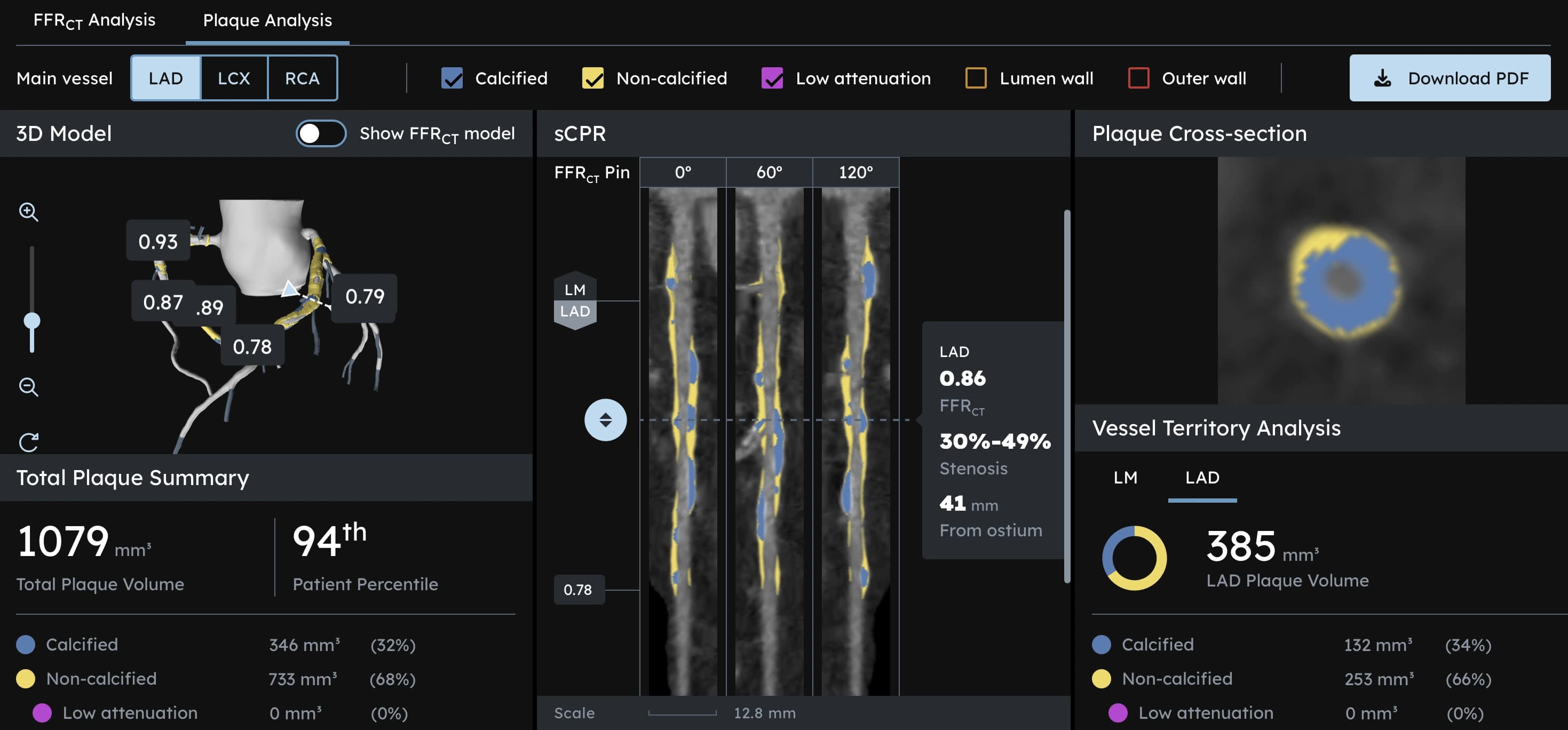
A calcium score is the usual next step, but it only sees hardened plaque. Softer, rupture-prone plaque can build while the score reads zero.
In the Miami Heart Study, 16% of symptom-free adults with a zero score still had plaque on a CCTA. Being male alone was the top predictor.
With limitations of calcium scores and stress tests, a CCTA shows the arteries in accurate and non-invasive detail. In the SCOT-HEART trial, it cut coronary death or nonfatal heart attack by 41% over five years.
The benefit came from action: once plaque was visible, more patients started prevention. Seeing it is what changes behavior.
One more marker men rarely connect: erectile changes. New ED raised subsequent heart attack and stroke risk by 25%, on par with smoking.
Well means seeing early
With cancer, time is everything. Earlier detection is a major reason U.S. cancer deaths have fallen 34% since 1991. Yet advanced prostate cancer is rising, up 6% a year in men 55 to 69.
The fix isn't more biopsies. It's better imaging. In the PRECISION trial, an MRI-first approach found more dangerous prostate cancers and fewer harmless ones than standard biopsy. Colorectal cancer is now the top cancer killer of Americans under 50. Three in four of those cases are found late.
Guideline screenings cover only a handful of cancers. Kidney, liver, pancreas, and others have no routine test at all. A Full-Body MRI looks across those organs in one visit, with no pain, no radiation. Paired with your colonoscopy and PSA, it closes the gaps.
Well means composition, not weight
While weight has been used as shorthand for health for decades, modern discourse has shifted that thinking drastically. What matters is where your fat sits and how much muscle carries you.
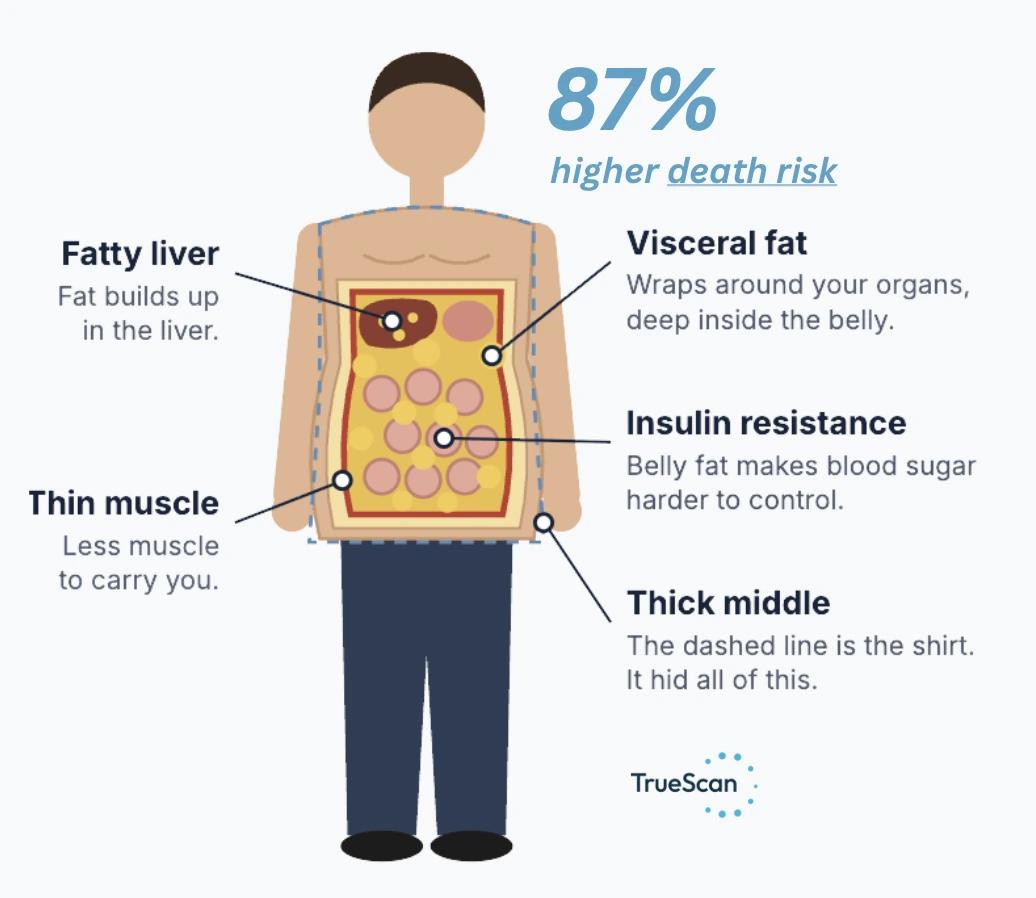
Men with a normal BMI but a thick middle had an 87% higher death risk than men of the same BMI. Thick middles have visceral fat to blame. It wraps the organs and drives fatty liver and insulin resistance.
An MRI can measure it precisely. And in lifestyle adjustment, sleep is vital but fitness may be the strongest lever of all: the fittest adults had about 80% lower death risk than the least fit.
Well means a steady mind
In men, depression often doesn't look like sadness. It looks like irritability, anger, heavier drinking, or risk-taking. Counting those signs, men met the criteria for depression as often as women. Many are simply never asked the right questions.
Accordingly, heart attack risk was about 4.7 times higher in the two hours after an angry outburst. A steady mind isn't a nice-to-have, it's part of the standard. If you're thinking about ending your life, call or text 988.
The standard, by decade
| Age | Know | Screen | See inside |
|---|---|---|---|
| 30s | Blood pressure, cholesterol, waist, sleep | Family history review | Early baseline if family history is strong |
| 40s | Add A1c and fitness benchmarks | Colorectal at 45; earlier PSA if high risk | CCTA and full-body MRI baselines |
| 50s+ | All of the above, yearly | PSA at 50; lung CT if you've smoked | Yearly full-body MRI, compared over time |
The TrueScan experience
TrueScan in St. Petersburg, Florida, is built for men who want the full picture, delivered the way they'd expect.
- AI Heart Scan (CCTA): 15 minutes. HeartFlow AI maps every plaque type and measures blood flow, without a catheter.
- Full-Body MRI: 60 minutes, head to ankle, no radiation. Looks for early cancers, aneurysms, and fatty liver.
- Executive MRI: adds brain volume analysis and detailed liver and body composition mapping.
- Total Health: heart and body, together, in one visit.
Appointments are often available the same week. The wide, open-bore scanner and in-room entertainment keep it comfortable.
Results arrive in about 48 hours, with a radiologist's report and a 60-minute consult with a physician.
Each year's scan is compared with the last. That's the difference between a checkup and a standard. Book your scan.
FAQ
What does “well” mean for men? Not just the absence of disease. It means knowing your heart, body composition, and cancer risk in detail, and tracking them over time.
Can you have heart disease with a calcium score of zero? Yes. About 1 in 6 people with a zero score still had plaque on a CCTA.
Is a full-body MRI worth it if I feel fine? Feeling fine is when it's most useful. It covers organs with no routine screening test, alongside your guideline screenings.
Does a full-body MRI replace a colonoscopy? No. It complements guideline screenings like colonoscopy and PSA testing.
References
[1] Fryar, C. D., Kit, B., Carroll, M. D., & Afful, J. (2024). Hypertension Prevalence, Awareness, Treatment, and Control Among Adults Age 18 and Older: United States, August 2021–August 2023. NCHS data brief, (511), CS354233. link
[2] Kasivisvanathan, V., Rannikko, A. S., Borghi, M., Panebianco, V., Mynderse, L. A., Vaarala, M. H., … Moore, C. M. (2018). MRI-targeted or standard biopsy for prostate-cancer diagnosis. New England Journal of Medicine, 378(19), 1767–1777. link
[3] Kratzer, T. B., Mazzitelli, N., Star, J., Dahut, W. L., Jemal, A., & Siegel, R. L. (2025). Prostate cancer statistics, 2025. CA: A Cancer Journal for Clinicians, 75(6), 485–497. link
[4] Mandsager, K., Harb, S., Cremer, P., Phelan, D., Nissen, S. E., & Jaber, W. (2018). Association of cardiorespiratory fitness with long-term mortality among adults undergoing exercise treadmill testing. JAMA Network Open, 1(6), e183605. link
[5] Martin, L. A., Neighbors, H. W., & Griffith, D. M. (2013). The experience of symptoms of depression in men vs women: Analysis of the National Comorbidity Survey Replication. JAMA Psychiatry, 70(10), 1100–1106. link
[6] Mostofsky, E., Penner, E. A., & Mittleman, M. A. (2014). Outbursts of anger as a trigger of acute cardiovascular events: A systematic review and meta-analysis. European Heart Journal, 35(21), 1404–1410. link
[7] Nasir, K., Cainzos-Achirica, M., Valero-Elizondo, J., Ali, S. S., Havistin, R., Lakshman, S., Blaha, M. J., Blankstein, R., Shapiro, M. D., Arias, L., Saxena, A., Feldman, T., Budoff, M. J., Ziffer, J. A., Fialkow, J., & Cury, R. C. (2022). Coronary Atherosclerosis in an Asymptomatic U.S. Population: Miami Heart Study at Baptist Health South Florida. JACC. Cardiovascular imaging, 15(9), 1604–1618. link
[8] Sahakyan, K. R., Somers, V. K., Rodriguez-Escudero, J. P., Hodge, D. O., Carter, R. E., Sochor, O., Coutinho, T., Jensen, M. D., Roger, V. L., Singh, P., & Lopez-Jimenez, F. (2015). Normal-weight central obesity: Implications for total and cardiovascular mortality. Annals of Internal Medicine, 163(11), 827–835. link
[9] SCOT-HEART Investigators. (2018). Coronary CT angiography and 5-year risk of myocardial infarction. New England Journal of Medicine, 379(10), 924–933. link
[10] Siegel, R. L., Kratzer, T. B., Wagle, N. S., Sung, H., & Jemal, A. (2026a). Cancer statistics, 2026. CA: A Cancer Journal for Clinicians, 76(1), e70043. link
[11] Siegel, R. L., Wagle, N. S., Star, J., Kratzer, T. B., Smith, R. A., & Jemal, A. (2026b). Colorectal cancer statistics, 2026. CA: A Cancer Journal for Clinicians, e70067. link
[12] Thompson, I. M., Tangen, C. M., Goodman, P. J., Probstfield, J. L., Moinpour, C. M., & Coltman, C. A. (2005). Erectile dysfunction and subsequent cardiovascular disease. JAMA, 294(23), 2996–3002. link