Aneurysms are medical time bombs. Most cause zero symptoms until they rupture, and by then, survival becomes a coin flip.
Right now, an estimated 6.8 million Americans are walking around with unruptured brain aneurysms, roughly 1 in 50 people. Most have no idea. When rupture occurs, approximately 50% die. Fifteen percent never make it to the hospital.
This guide explains what aneurysms are, why they form, where they develop, how they're detected, and what you can do to reduce your risk.
What Is an Aneurysm?
Your arteries are under constant pressure. Every heartbeat sends blood surging through them at high velocity. Normally, arterial walls handle this stress without issue. Three layers of tissue work together to maintain structural integrity.
An aneurysm develops when a weak spot in the arterial wall begins to balloon outward. Picture a garden hose with a weak point that bulges when you turn on the water.
Here's where the physics become dangerous: as the bulge expands, the wall gets thinner. The thinner it gets, the weaker it becomes. The weaker it becomes, the more likely it is to rupture.
The Medical Definition
Physicians define an aneurysm as arterial dilation exceeding 150% of normal diameter.
If a healthy section of your aorta measures 2 cm across, anything beyond 3 cm qualifies as an aneurysm. For brain arteries, which are much smaller, even a few millimeters of bulging represents significant pathology.
How Aneurysms Form
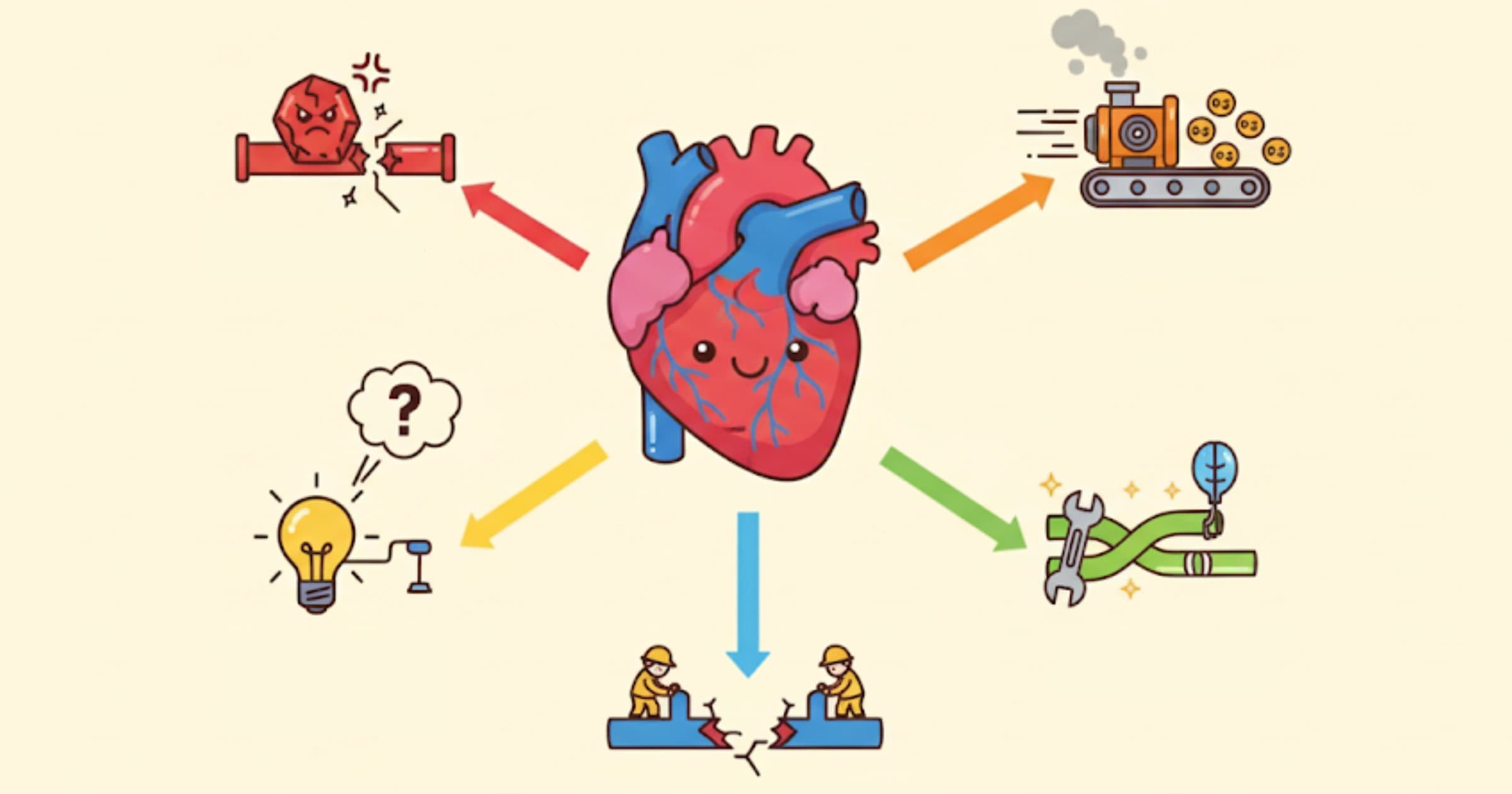
Aneurysm formation is the result of multiple biological factors converging over time:
Hemodynamic stress
Blood flow creates physical forces on vessel walls. At bifurcations, where arteries split, blood flow becomes turbulent, generating abnormal wall shear stress. Over years, this mechanical stress damages the arterial wall.
Structural degradation
The arterial wall contains three layers: the intima (inner lining), media (muscular middle layer), and adventitia (outer tissue). Brain arteries lack an external elastic lamina, making them particularly vulnerable. When the internal elastic lamina breaks down and smooth muscle cells are depleted, the wall loses structural integrity.
Inflammatory processes
Chronic inflammation plays a direct role in weakening vessel walls. Inflammatory cells release enzymes that degrade collagen and elastin; the structural proteins that give arteries their strength.
Genetic susceptibility
Some people inherit variations in genes affecting connective tissue strength, making their arteries more vulnerable to aneurysm formation even without other risk factors.
Why Ruptures Are Catastrophic
When an aneurysm ruptures, blood under arterial pressure floods surrounding tissue. The consequences depend on location, but once rupture happens, you're in a race against time.
Brain Aneurysm Rupture: Subarachnoid Hemorrhage
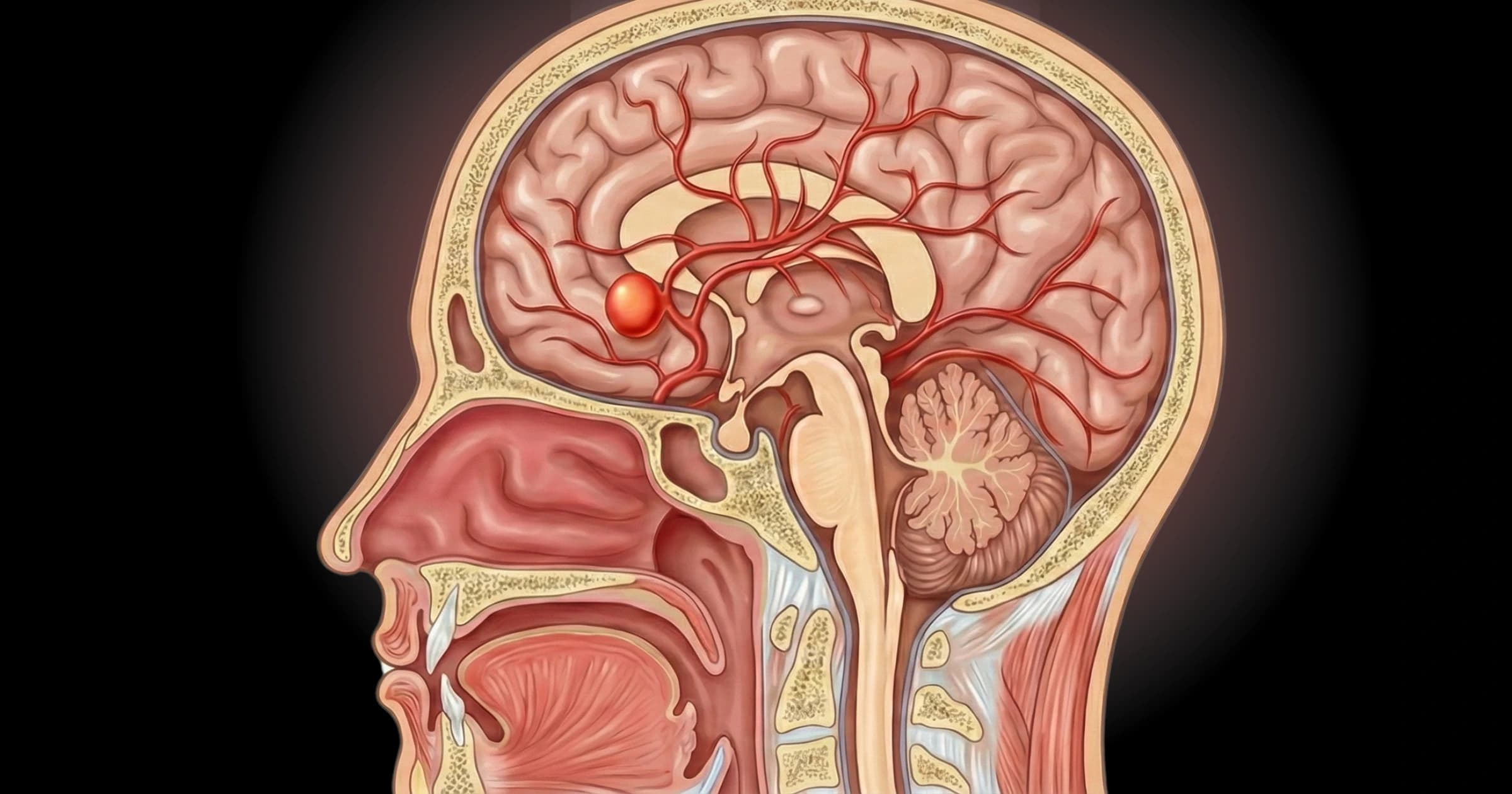
When a brain aneurysm ruptures, blood spills into the subarachnoid space, which is the narrow region between your brain and skull normally filled with cerebrospinal fluid. This triggers what neurologists call subarachnoid hemorrhage (SAH).
What happens:
- Blood is toxic to brain tissue when outside blood vessels
- Pressure builds inside the rigid skull with nowhere to go
- Brain structures get compressed
- Blood flow to neurons is compromised
- Cells begin dying within minutes
- Brain swelling causes additional injury
The numbers:
- 50% overall mortality rate
- 15% die before reaching a hospital
- 25% die within the first 24 hours
- Among survivors, 66% face permanent neurological deficits
Delayed complications
Even after successful treatment, 30% of survivors develop delayed cerebral ischemia (DCI) within two weeks. Blood in the subarachnoid space causes blood vessels to spasm, reducing blood flow and causing additional brain injury.
Aortic Aneurysm Rupture: Massive Internal Bleeding
When your body's largest artery tears open, arterial blood under high pressure floods the abdominal or chest cavity.
What happens:
- Blood pressure plummets as circulating volume drops
- The heart can't pump fast enough to compensate
- Organs fail from lack of oxygen
- Even with emergency surgery, most patients don't survive
The numbers: Mortality rate approaches 75-90% including both pre-hospital and in-hospital deaths.
Many patients experience a "sentinel leak", which is a small tear causing sudden severe pain. This is actually a warning, a brief window where emergency surgery might help. But that window is measured in hours, sometimes minutes.
The Silent Nature of Aneurysms
What makes aneurysms particularly deadly is that most cause absolutely no symptoms until they rupture.
An estimated 6.8 million people in the United States have an unruptured brain aneurysm right now. The vast majority have no idea. The aneurysm presents no impact on daily life: no pain, no warning signs, nothing.
Globally, the prevalence of unruptured brain aneurysms hovers around 3.2% of the population. The annual rupture rate is approximately 8 to 10 per 100,000 people, translating to about 30,000 brain aneurysm ruptures each year in the United States alone. That's one rupture every 18 minutes.
How Aneurysms Are Usually Found
Most aneurysms are discovered by accident. Someone gets a CT scan after a car accident, and doctors find a 5mm bulge in a cerebral artery. Or an ultrasound for abdominal pain reveals an aorta that's quietly expanded to twice its normal width.
These incidental findings are often life-saving. Finding an unruptured aneurysm gives doctors and patients options. Treating an unruptured aneurysm is far safer than dealing with a rupture.
The Rare Warning Signs
When unruptured aneurysms do cause symptoms, they're often vague and easily dismissed.
For brain aneurysms:
- Persistent headaches that feel different from your normal pattern
- Pain behind the eye
- Double vision
- Numbness on one side of the face
- Larger aneurysms pressing on brain structures can cause drooping eyelids or dilated pupils
For abdominal aortic aneurysms:
- Back pain that won't go away
- A pulsating sensation in the abdomen
These warning signs are rare and nonspecific. Back pain could be a pulled muscle. Headaches could be stress or dehydration. Most people don't think "aneurysm."
Ruptured brain aneurysms announce themselves with what patients describe as "the worst headache of my life" – a thunderclap headache that strikes with terrifying suddenness. By then, it's often too late for the best outcomes.
Where Aneurysms Form
Location matters. Where an aneurysm develops influences both symptoms and risk.
Brain (Cerebral) Aneurysms
90% of cerebral aneurysms are saccular. These are also called "berry" aneurysms because they look like berries attached to a blood vessel. Most form near the Circle of Willis, the ring of arteries at the base of your brain that supplies blood to all regions.
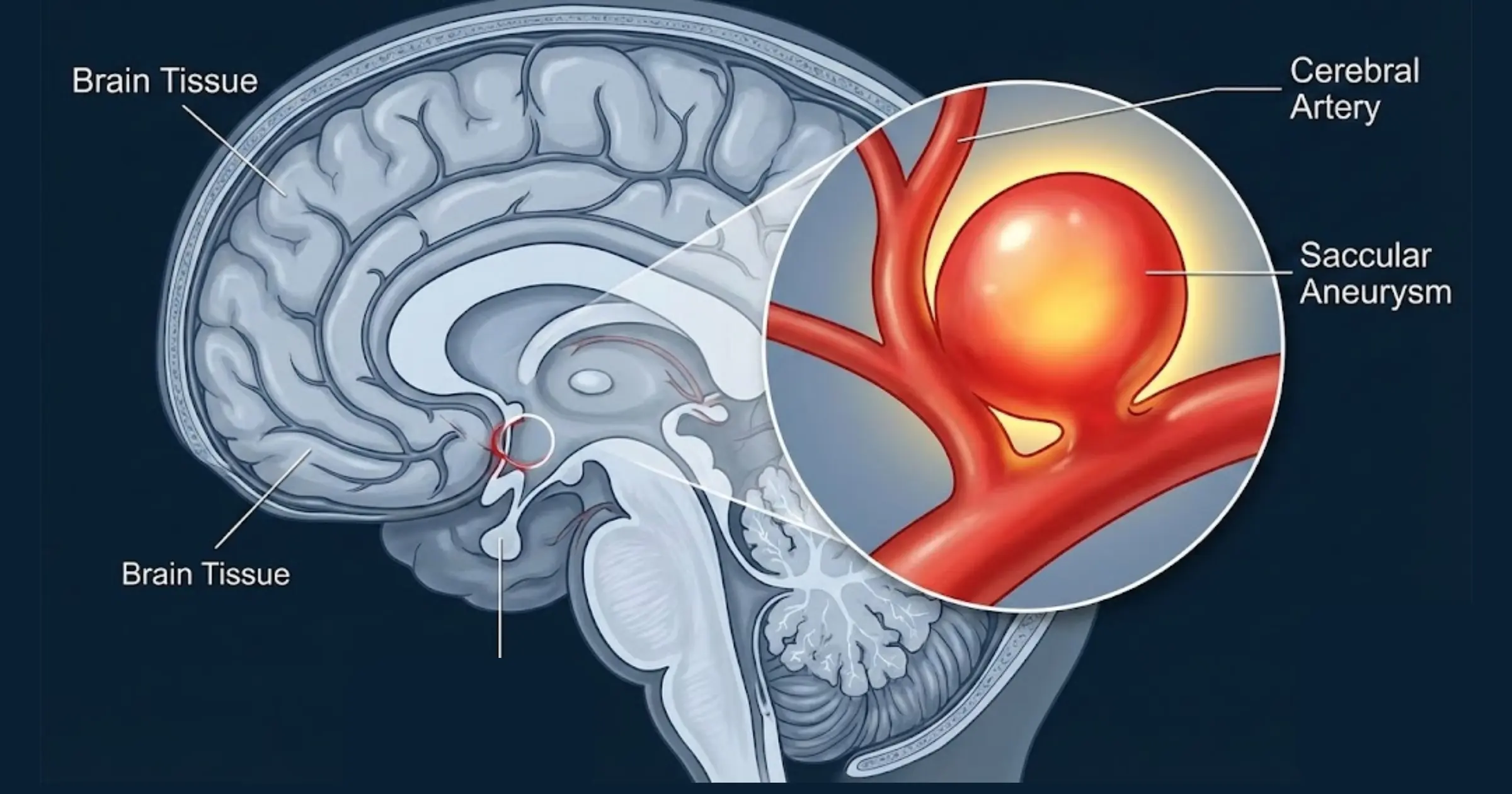
Saccular aneurysms (berry aneurysms) can occur in any artery in the brain.
Common locations:
- Anterior communicating artery (where two major brain arteries connect)
- Posterior communicating artery
- Middle cerebral artery bifurcation (where vessels branch)
Size matters significantly. Larger cerebral aneurysms carry exponentially higher rupture risk.
Aneurysms 5-7mm and larger are at higher risk of rupturing and are typically considered for intervention – either endovascular treatment or surgical clipping. Aneurysms below this threshold are usually monitored with periodic imaging rather than treated, as the treatment risks often outweigh the rupture risk.
Women have higher rates of brain aneurysms than men (3:2 ratio) and higher rupture rates, particularly after age 55 (about 1.5 times the risk). This may be related to hormonal changes affecting vascular tissue.
Aortic Aneurysms
The aorta is your body's main artery, carrying oxygen-rich blood from your heart to the rest of your body.
Abdominal Aortic Aneurysms (AAA)
The most common type outside the brain. These occur in the portion of the aorta running through your abdomen, typically below where the renal arteries branch off to supply the kidneys. Normally, the abdominal aorta measures about 2 to 2.5 centimeters in diameter. Anything beyond 3 centimeters is considered an aneurysm.
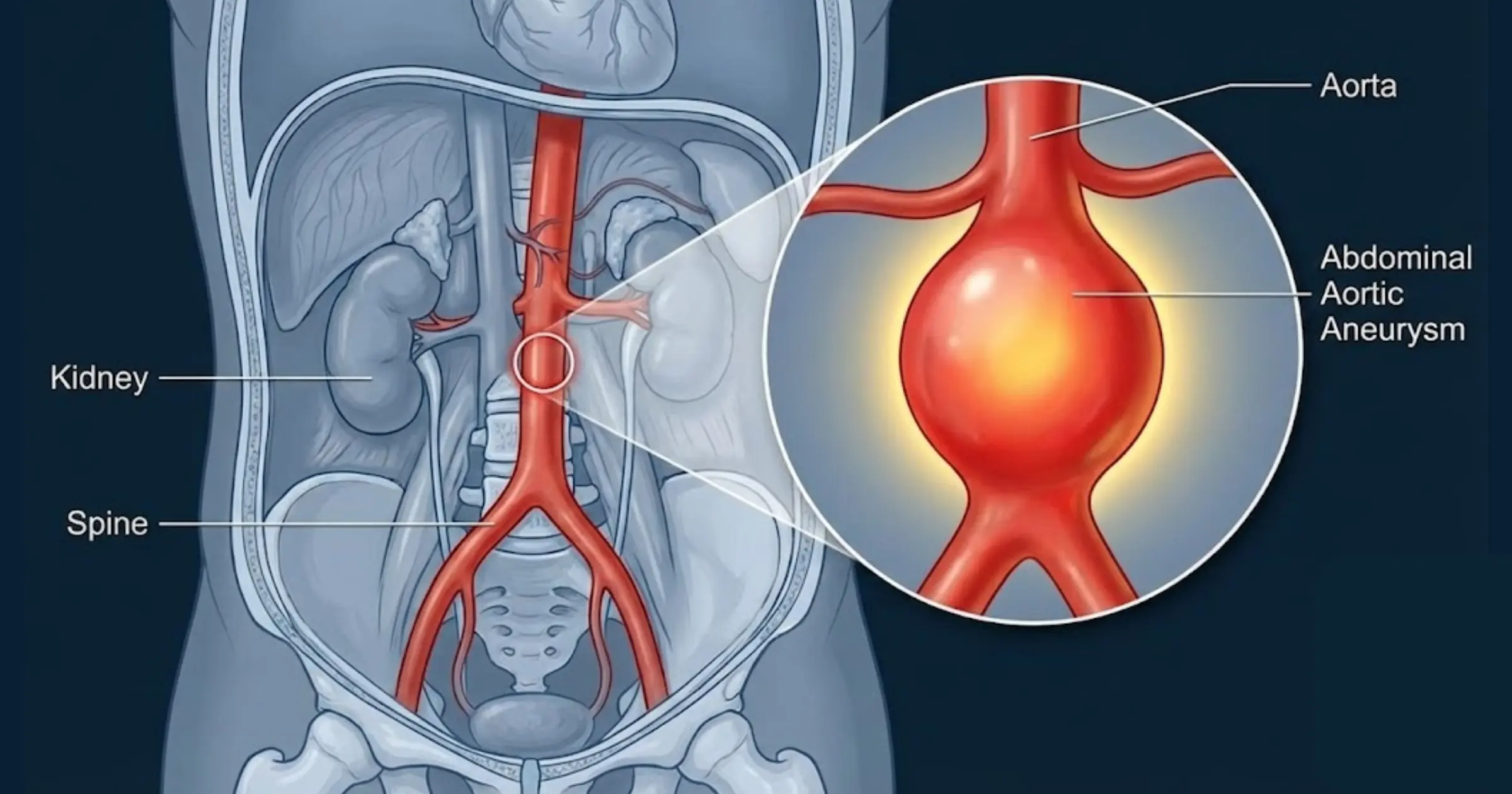
This AAA demonstrates a fusiform dilation, in which weakness involves the entire circumference of the aorta, resulting in symmetric expansion of the vessel.
The rupture risk increases dramatically with size. Aneurysms under 4 centimeters carry virtually no annual rupture risk. Between 4 and 5.5 centimeters, risk climbs to 0.5% to 5% per year. Beyond 5.5 centimeters, rupture becomes increasingly likely, which is why surgical repair is typically recommended at this threshold.
Thoracic Aortic Aneurysms (TAA)
Develop in the chest portion of the aorta. These tend to grow more slowly than abdominal aneurysms – expanding at rates of 1 to 3 millimeters per year.
Many grow without causing symptoms. Larger thoracic aneurysms can press on nearby structures, causing:
- Chest pain
- Difficulty breathing
- Persistent cough
- Hoarseness (from pressure on nerves to the voice box)
The incidence of thoracic aortic aneurysms is about 5.3 per 100,000 people per year. When they rupture, mortality exceeds 90%.
Peripheral Aneurysms
While less common, aneurysms can develop in peripheral arteries:
Popliteal artery aneurysms form behind the knee and represent the most common peripheral aneurysm type. These can cause leg pain, swelling, or blood clots.
Splenic artery aneurysms occur in the artery supplying the spleen and are more common in women. Most are asymptomatic but can rupture, particularly during pregnancy.
Carotid artery aneurysms are rare but serious since these arteries supply blood to the brain. They can cause stroke symptoms or neck masses.
Each location presents unique challenges for detection and treatment.
Why Screening Isn't Universal
No universal screening exists for aneurysms. There's three primary reasons:
1. Cost vs. benefit has not been proven for low-risk population
Aneurysms are uncommon enough in the general population that screening everyone would likely cost more than it saves.
2. We can't predict which aneurysms will rupture
Some aneurysms stay stable for decades. Others grow and rupture. We still don't fully understand why.
3. Treatment has risks
Surgery can cause complications. Finding a small, stable aneurysm might lead to an intervention that does more harm than leaving it alone.
Current Screening Recommendations
The U.S. Preventive Services Task Force recommends one screening: ultrasound for abdominal aortic aneurysm in men aged 65-75 who have smoked.
That's it. One demographic, one aneurysm type, one scan.
Brain aneurysm screening isn't recommended for the general population at all – only for high-risk groups:
- Two or more first-degree relatives with aneurysms
- Genetic conditions (polycystic kidney disease, connective tissue disorders like Marfan or Ehlers-Danlos)
This creates a significant gap. Many people with aneurysms fall outside these narrow screening criteria. They have risk factors – family history, hypertension, smoking – but not enough to justify screening under current guidelines.
How Aneurysms Are Detected
When doctors do look for aneurysms, a few imaging methods work well. Each has specific use cases and tradeoffs.
Ultrasound
The standard screening tool for abdominal aortic aneurysms.
Performance: 95-100% sensitivity
Advantages: Noninvasive, inexpensive, no radiation
How it works: Technician moves a probe across your abdomen. Sound waves create images of the aorta.
This is why ultrasound is the recommended screening method for that one demographic (men 65-75 who've smoked) – it's effective and low-risk.
CT Angiography
Highly accurate with excellent anatomical detail.
Performance: Very high sensitivity and specificity
Advantages: Fast scan, detailed 3D reconstruction, can visualize entire vascular tree
How it works: CT scanner takes rapid X-ray images from multiple angles. Contrast dye injected into a vein highlights blood vessels.
Typically used when you need immediate imaging or surgical planning, not routine screening.
MRI/MRA
Magnetic resonance imaging (MRI) and angiography (MRA) are preferred for detecting brain aneurysms and can also detect aortic aneurysms better than an ultrasound.. They use magnetic fields and radio waves – no radiation.
Brain aneurysm detection by size:
- >3mm: 93-97% sensitivity
- <3mm: 50-70% sensitivity
Brain aneurysms larger than 3mm have a higher risk of rupture compared to smaller ones, so they're the most important to screen for.
Full-Body MRI: A New Screening Approach
This brings us to an emerging option: full-body MRI screening.
Full-body MRIs are comprehensive scans that examine your entire body – from brain to ankle – in a single session, typically lasting under an hour. Unlike CT scans, they involve no radiation exposure and usually don't require contrast dye.
What can full-body MRI detect?
The technology can identify aneurysms in multiple locations:
- Cerebral vessels in the brain
- Thoracic aorta in the chest
- Abdominal aorta
- Major peripheral arteries
For someone with risk factors – family history of aneurysms, smoking history, hypertension, or connective tissue disorders – a full-body MRI could detect an aneurysm before it becomes life-threatening.
Treating an unruptured aneurysm is far safer and more successful than dealing with a rupture. Clinics that offer this service are typically well-prepared for the discovery of silent aneurysms and are equipped to refer patients to trusted specialists or the ER immediately for treatment.
The appeal is straightforward: detect the problem early, when it's manageable and less volatile, before rupture occurs.
Understanding Your Personal Risk
Several factors substantially increase aneurysm risk. Some you can't control. Others you can modify.
Age
Most brain aneurysms occur in people aged 35 to 60, with a median age of 50. Brain aneurysms are rare in children and young adults but become more common with each decade.
For aortic aneurysms, risk increases sharply after age 50 and peaks during the eighth decade of life. The arterial wall weakens over time, and decades of mechanical stress take their toll.
Sex
Women have higher rates of brain aneurysms than men (3:2 ratio) and higher rupture rates. This difference becomes more pronounced after age 50, when the ratio approaches 2:1. Declining estrogen levels after menopause may reduce collagen content in vascular tissue, making vessel walls more vulnerable.
For abdominal aortic aneurysms, the pattern reverses – men predominate at a 2:1 to 3.5:1 ratio until age 80, when rates equalize.
Family History
If two or more first-degree relatives have had aneurysms, your risk increases fourfold. This genetic component suggests inherited weaknesses in arterial structure.
Having one first-degree relative with an aneurysm roughly doubles your risk. The younger the relative was when diagnosed, the higher your risk. Multiple affected family members multiply the risk further.
This is why family history is one of the few criteria that justifies screening in otherwise healthy people.
Smoking
One of the strongest modifiable risk factors. Smokers face significantly elevated risks for both aneurysm formation and rupture.
How smoking damages arteries:
- Nicotine promotes inflammation in vessel walls
- Smoking impairs collagen synthesis
- Oxidative stress damages endothelial cells
- Blood pressure spikes with each cigarette
The good news: quitting reduces your risk substantially. The vascular benefits of smoking cessation begin within weeks and continue to accrue over years.
Hypertension (High Blood Pressure)
Damages arterial walls over time, increasing both formation and rupture risk.
People with systolic blood pressure over 130 mmHg have 2.3 times the rupture risk compared to those with well-controlled blood pressure.
Hypertension creates chronic mechanical stress on vessel walls. The constant elevated pressure accelerates structural degradation, particularly at weak points and bifurcations.
This is modifiable. Blood pressure can be controlled through:
- Medication
- Diet (reducing sodium, increasing potassium)
- Regular exercise
- Weight management
- Stress reduction
Genetic Conditions
Several inherited conditions substantially increase aneurysm risk:
Polycystic kidney disease (ADPKD): 4.4 times higher risk of brain aneurysms. The same genetic defect that causes kidney cysts affects arterial wall integrity.
Marfan syndrome: Affects connective tissue throughout the body. Significantly increases risk of aortic aneurysms, particularly thoracic aortic aneurysms and aortic root dilation.
Ehlers-Danlos syndrome (vascular type): Causes fragile blood vessels prone to aneurysm and spontaneous rupture.
Bicuspid aortic valve: A congenital heart valve abnormality associated with increased risk of thoracic aortic aneurysm.
If you have any of these conditions, screening and monitoring are essential parts of your medical care.
Other Risk Factors
Cocaine use: Causes acute, severe blood pressure spikes that can trigger rupture. Also promotes aneurysm formation through vasoconstriction and chronic vascular damage.
Heavy alcohol consumption: Associated with increased risk of aneurysmal rupture, likely through effects on blood pressure and inflammatory pathways.
Race and ethnicity: African-Americans and Hispanics have about twice the risk of brain aneurysm rupture compared to whites. The reasons for this disparity aren't fully understood but may involve genetic factors and differences in hypertension prevalence.
The Path Forward: What You Can Do
The good news is that you can take concrete steps to reduce your aneurysm risk.
Control Your Blood Pressure
Hypertension is the leading modifiable risk factor for aneurysms.
How to manage blood pressure:
- Monitor it regularly at home
- Take prescribed medications consistently
- Increase potassium (bananas, leafy greens, beans)
- Exercise regularly (150 minutes/week of moderate activity)
- Maintain healthy weight
- Manage stress through meditation, yoga, or other techniques
- Limit alcohol
Quit Smoking
This single change dramatically reduces your risk of both developing aneurysms and experiencing rupture.
Know Your Family History
If aneurysms run in your family, discuss screening options with your doctor.
You may qualify for targeted imaging that could save your life. This is particularly important if:
- Two or more first-degree relatives have had aneurysms
- A relative was diagnosed young (under age 50)
- You have a known genetic condition associated with aneurysms
Improve Cardiovascular Health
The same lifestyle factors that protect your heart also protect your arteries:
Exercise regularly: Aim for 150 minutes of moderate aerobic activity per week. Exercise strengthens your cardiovascular system and helps control blood pressure, weight, and cholesterol.
Eat a balanced diet: Focus on fruits, vegetables, whole grains, lean proteins, and healthy fats. The Mediterranean diet and DASH (Dietary Approaches to Stop Hypertension) diet have strong evidence for vascular health.
Manage cholesterol: High cholesterol contributes to atherosclerosis, which is associated with aneurysm formation. Diet, exercise, and medication (if needed) can keep cholesterol in healthy ranges.
Maintain healthy weight: Obesity increases risk for multiple cardiovascular conditions including aneurysms.
Consider Screening If You're High-Risk
For those at elevated risk, having an informed conversation with your healthcare provider about screening options matters.
You might be high-risk if you have:
- Family history of aneurysms
- Personal history of aneurysm (checking for new aneurysms)
- Known genetic condition associated with aneurysms
- Multiple cardiovascular risk factors
Screening options depend on your individual profile:
- Ultrasound for abdominal aortic aneurysm (if you fit criteria: men 65-75 who have smoked)
- MRA for brain aneurysms (if family history or genetic condition)
- Full-body MRI for comprehensive assessment (if multiple risk factors)
The decision isn't always straightforward. Your doctor can help weigh the potential benefits of early detection against the costs, risks, and psychological burden of surveillance.
The Bottom Line
Aneurysms represent a genuine health threat, but they're not inevitable.
Unlike many medical conditions where early detection offers marginal benefits, finding an aneurysm before it ruptures truly is the difference between a manageable medical issue and a catastrophic emergency.
The goal isn't to live in fear of aneurysms. The goal is to be informed, to understand your risks, and to make decisions that give you the best possible outcomes.
References
[1] Aggarwal, S., Qamar, A., Sharma, V., & Sharma, A. (2011). Abdominal aortic aneurysm: A comprehensive review. Experimental and clinical cardiology, 16(1), 11–15.
[2] Brain Aneurysm Foundation. (2025, January 3). Statistics and Facts – Brain Aneurysm Foundation. link
[3] Jersey, A. M., & Foster, D. M. (2023). Cerebral Aneurysm. In StatPearls. StatPearls Publishing.
[4] Korja, M., Kivisaari, R., Rezai Jahromi, B., & Lehto, H. (2017). Natural History of Ruptured but Untreated Intracranial Aneurysms. Stroke, 48(4), 1081–1084. link
[5] Kent K. C. (2014). Clinical practice. Abdominal aortic aneurysms. The New England journal of medicine, 371(22), 2101–2108. link
[6] Krings, T., Mandell, D. M., Kiehl, T. R., Geibprasert, S., Tymianski, M., Alvarez, H., terBrugge, K. G., & Hans, F. J. (2011). Intracranial aneurysms: from vessel wall pathology to therapeutic approach. Nature reviews. Neurology, 7(10), 547–559. link
[7] Yang, G., Khan, A., Liang, W., Xiong, Z., & Stegbauer, J. (2024). Aortic aneurysm: pathophysiology and therapeutic options. MedComm, 5(9), e703. link
[8] Naggara, O. N., White, P. M., Guilbert, F., Roy, D., Weill, A., & Raymond, J. (2010). Endovascular treatment of intracranial unruptured aneurysms: systematic review and meta-analysis of the literature on safety and efficacy. Radiology, 256(3), 887–897. link
[9] Gouveia E Melo, R., Silva Duarte, G., Lopes, A., Alves, M., Caldeira, D., Fernandes E Fernandes, R., & Mendes Pedro, L. (2022). Incidence and Prevalence of Thoracic Aortic Aneurysms: A Systematic Review and Meta-analysis of Population-Based Studies. Seminars in thoracic and cardiovascular surgery, 34(1), 1–16. link
[10] US Preventive Services Task Force, Owens, D. K., Davidson, K. W., Krist, A. H., Barry, M. J., Cabana, M., Caughey, A. B., Doubeni, C. A., Epling, J. W., Jr, Kubik, M., Landefeld, C. S., Mangione, C. M., Pbert, L., Silverstein, M., Simon, M. A., Tseng, C. W., & Wong, J. B. (2019). Screening for Abdominal Aortic Aneurysm: US Preventive Services Task Force Recommendation Statement. JAMA, 322(22), 2211–2218. link
[11] Wardlaw, J. M., & White, P. M. (2000). The detection and management of unruptured intracranial aneurysms. Brain : a journal of neurology, 123 ( Pt 2), 205–221. link
[12] White, P. M., Teasdale, E. M., Wardlaw, J. M., & Easton, V. (2001). Intracranial aneurysms: CT angiography and MR angiography for detection prospective blinded comparison in a large patient cohort. Radiology, 219(3), 739–749. link